

The Federal Reserve is restructuring bank supervision into five regions, following state lines, and putting one regional leader in charge. It's also planning to revise regulatory thresholds so that banks will need to be bigger before tougher standards kick in.


The 24th annual ranking of the 25 women whose leadership and innovation are radically changing banking.


Research shows artificial-intelligence programs bolster bad decisions and reduce diversity of thought, posing risks to banks' culture and governance.


-
Kristin Smith, president of the Solana Policy Institute, discusses what to expect in the next year in the world of on-chain finance.
-

Delays in Western Union and International Money Express' proposed merger have forced the companies to refile with antitrust regulators, which could trigger a new 30-day waiting period that could cause further delays.

-

Paxos Lab's digital token enables users to bet on gold leasing, another hedging option to traditional banking, stablecoins and cryptocurrency amid geopolitical pressures


Former bank CEOs David Provost and Chip Reeves assumed control of Parkway Bank on Thursday. They plan to use the $3.7 billion-asset bank as a springboard for organic growth and potential M&A throughout the Midwest.


Federal Deposit Insurance Corp. Chair Travis Hill said Tuesday that regulatory changes to bank supervision and M&A rules are meant to improve safety and soundness rather than water down oversight.


-

There wasn't just one recipe for landing among the top-performing banks with $50 billion or more in assets. There were two — or, in some cases, a mix of both.
-

OFG Bancorp, the parent company of Oriental Bank, has steadily climbed American Banker's rankings of the nation's top-performing banks. Here's how the Puerto Rican bank did it.
-

United Bank and Five Points Bank, both ranked among the top-performing banks by Capital Performance Group, said they have stayed in the mortgage business because they see it as a way to build strong relationships in the communities they serve.


-

Geopolitical turmoil combined with rapid deployment of new technology has made it more important than ever for banks to prioritize their anti-financial crime functions.
-

The way we have traditionally measured access to banking services has become less and less useful in a world where nonbank financial services are increasingly used by consumers of all kinds.
-
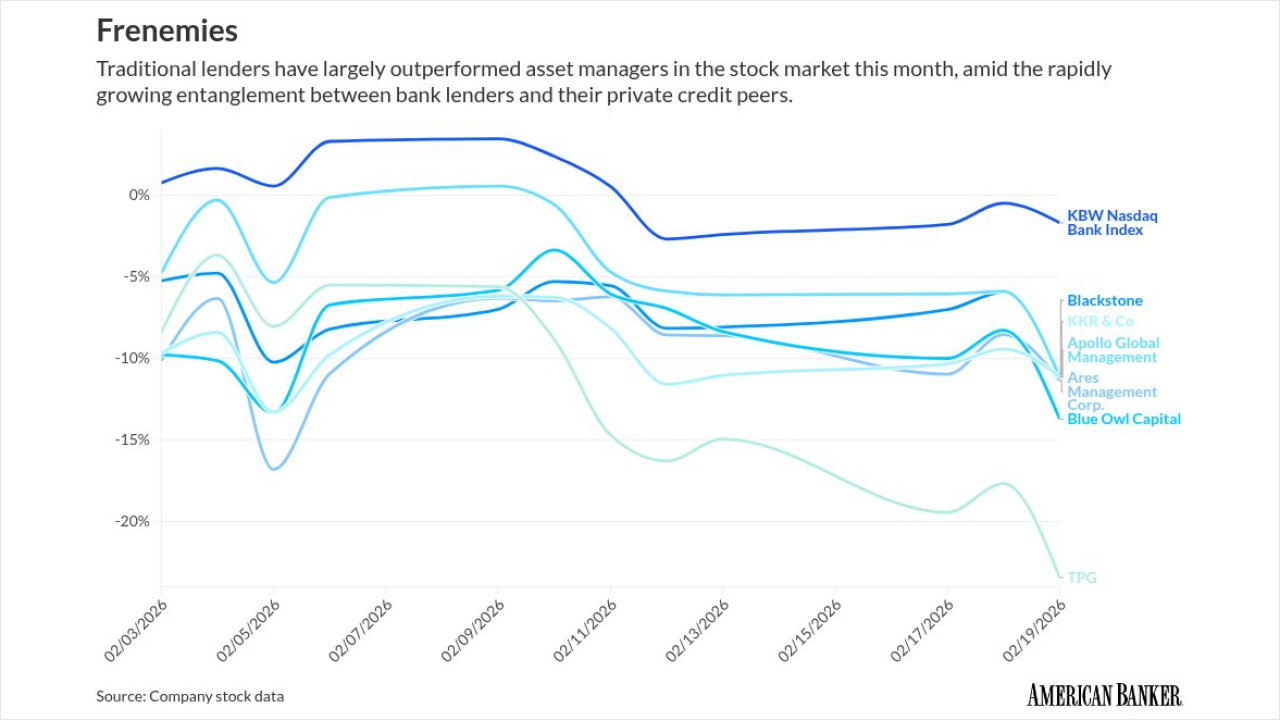
Many of the same signs that might have predicted the financial crisis nearly two decades ago are back, including sweeping deregulation, lax underwriting standards and opaque new financial products. We should proceed with caution.


There's been an onslaught of nonbank financial technology company charter applications and approvals already this year.

-
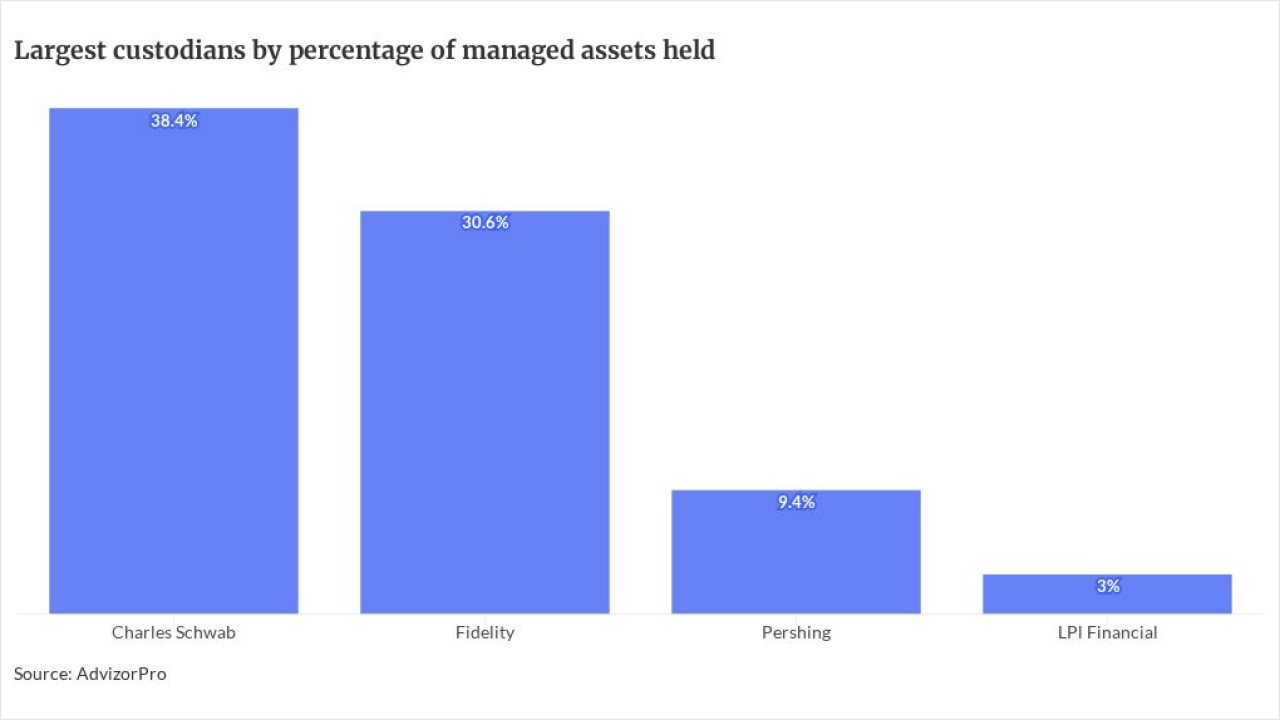
RIAs that custody less than $100 million with Fidelity have several options to choose from before being forced out of the firm next year. None of them is necessarily easy.

-

While it isn't a household name in most U.S. wealth management circles, RQD* Clearing just drew a substantial growth investment on the basis of its international clearing business. Can that translate to more stateside RIA relationships?

-

A prenup can start a couple's money conversation, protect an inheritance and even shape what happens if a surviving spouse remarries.


-

The chief risk officer's oversight extends to the modernization of loan pricing and scoring, which the GSEs' oversight agency has been accelerating.

-

The economy added just 29,000 jobs in September, far below economists expectations, though the unemployment rate remained steady, indicating softening in the labor market.

-
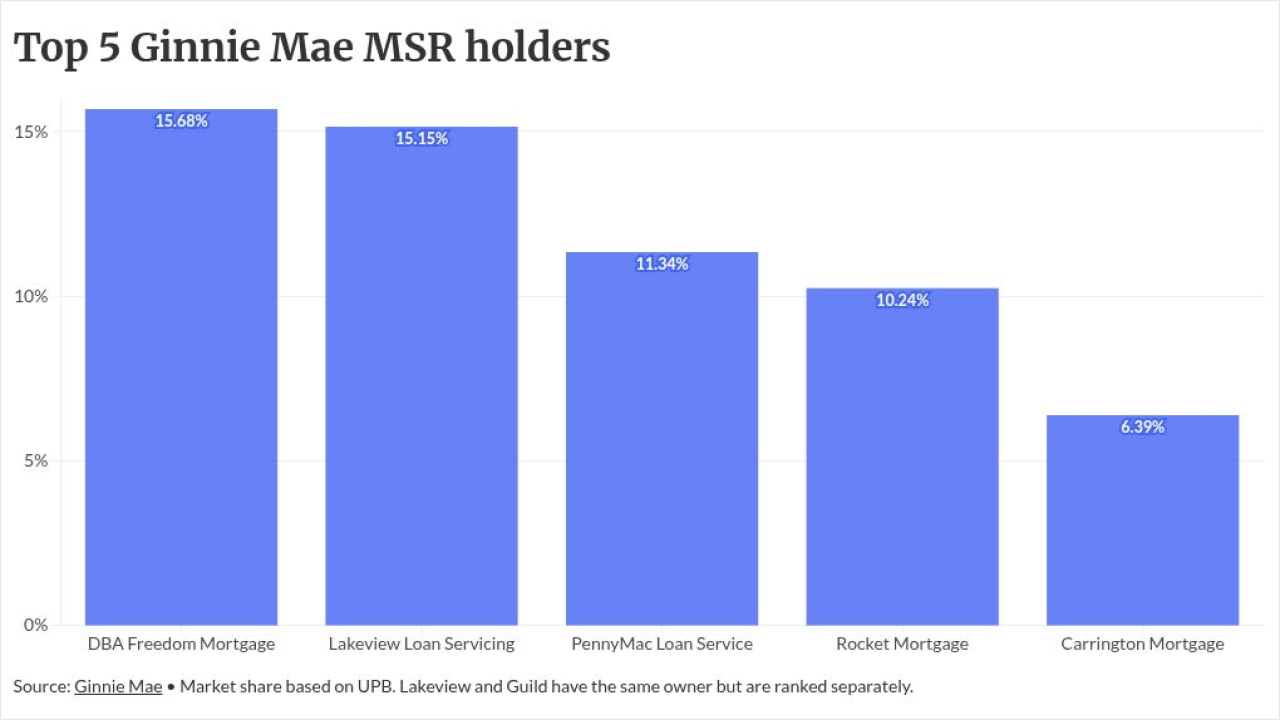
Larger public companies' high-profile servicing acquisitions tend to get the spotlight, but the two top leaders in the Ginnie MSR market are quieter players currently run as private companies.


-
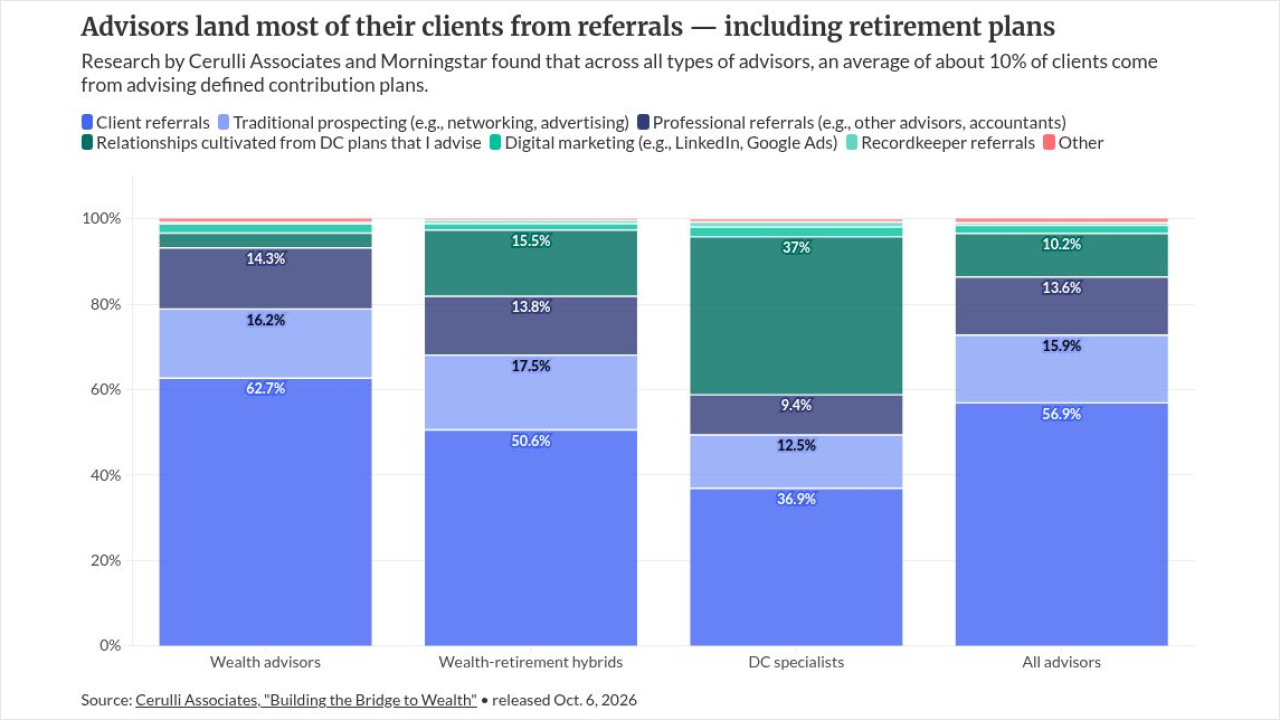
In their "bridge to wealth" study, Cerulli Associates and Morningstar look at how advisors can turn defined contribution plan participants into individual wealth management clients.

-
The agencies step in after Congress torpedoed the Clarity Act; but the lack of rules isn't what's holding crypto back.


-
Kyle Horn, the owner of a precious-metals dealer in San Diego, says his Bank of America account, which had about $50,000 in it, has been frozen for 18 months. He's suing to get his money back — and to win protections for other customers like him.


-
Financial Planning is seeking candidates under the age of 40 for its annual awards recognizing advisor employees at both wirehouse and regional firms for industry-leading production.

-
Many wealthy retirees hesitate to spend their savings. Advisors share how budgeting and cash flow planning help clients enjoy their wealth.

-


- Daily BriefingDelivered Every WeekdayIdeas that impact your business delivered to your inbox every day.
- TechnologyWednesday, ThursdayThe latest industry developments from digital banking to cybersecurity to AI.
- PaymentsDelivered Every WeekdayAn early-morning roundup of important headlines from the past 24 hours.
- Best of the WeekFridayThe most important and widely read stories from the previous week.

Structural change in banking is rarely defined by technology alone. Rather, leaders who know when to invest, where to modernize and which risks are worth taking are driving it.


The 23rd annual ranking of women leaders in the banking industry.
-
 Partner insights from Dell Technologies with NVIDIA
 -
 Partner insights from Dell Technologies with NVIDIA
 -
 Partner insights from Dell Technologies with NVIDIA
 -
 Partner Insights from Dell Technologies with NVIDIA


-
 Partner Insights from Fuse
 -
 Partner Insights from Teslar Software
 -
 Partner insights from Dell Technologies with NVIDIA
 - Partner Insights from Abrigo


